CIRDAP – Enabling Rural Communities

Centre on Integrated Rural Development for Asia and the Pacific (CIRDAP)

An Intergovernmental & Autonomous Organization; Established in 1979, Mandated for Promoting & Strengthening Integrated Rural Development Systems for 15 Asia-Pacific Countries; Namely Afghanistan, Bangladesh, Fiji, India, Indonesia, IR Iran, Lao PDR, Malaysia, Myanmar, Nepal, Pakistan, Philippines, Sri Lanka, Thailand & Vietnam.

Author name: CIRDAP

Latest News

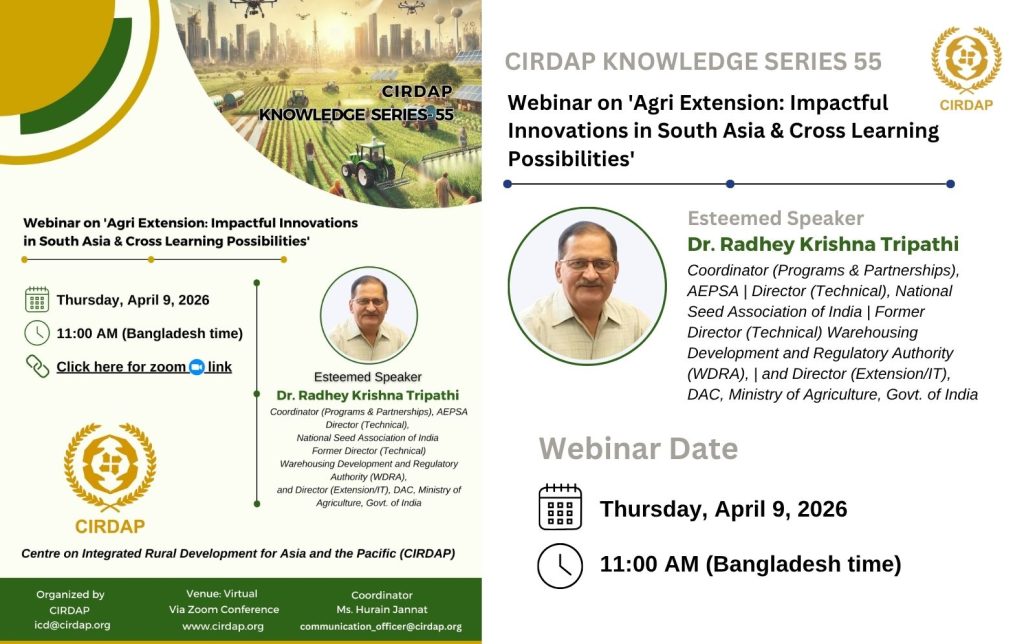
Webinar Announcement: ‘Agri Extension: Impactful Innovations in South Asia & Cross Learning Possibilities’

CIRDAP’s webinar under the CIRDAP Knowledge Series 2026 titled ‘Agri Extension: Impactful Innovations in South Asia & Cross Learning Possibilities’ will be held on (Thursday), April 9, 2026, at 11:00 a.m. Bangladesh time.  Challenges of Agriculture Sector in South Asian Region: The Esteemed Speaker: Dr RADHEY KRISHNA TRIPATHI, Coordinator (Programs & Partnerships), AEPSA Director (Technical), National Seed Association of India, Former Director (Technical) Warehousing Development and Regulatory Authority (WDRA), and Director (Extension/IT), DAC, Ministry of Agriculture, Govt. of India  Link to join: Join Zoom Meeting https://zoom.us/j/95234336164?pwd=vZt5i3ItGZgTBzbIqNaPGva8Gf2kLh.1 Meeting ID: 952 3433 6164 Passcode: 254367

Experts, List-1

Dr. Arpita Sharma

Field of Interest :
Coastal management and tourism, climate change and sea-level rise, small islands, tsunami-impacted coasts and mangroves.

Experts, List-1

Prof. Tapan Kumar Maity

Field of Interest :
Coastal management and tourism, climate change and sea-level rise, small islands, tsunami-impacted coasts and mangroves.

Experts, List-1

Dr Niranjan Sahoo

Field of Interest :
Coastal management and tourism, climate change and sea-level rise, small islands, tsunami-impacted coasts and mangroves.

CMC Updates

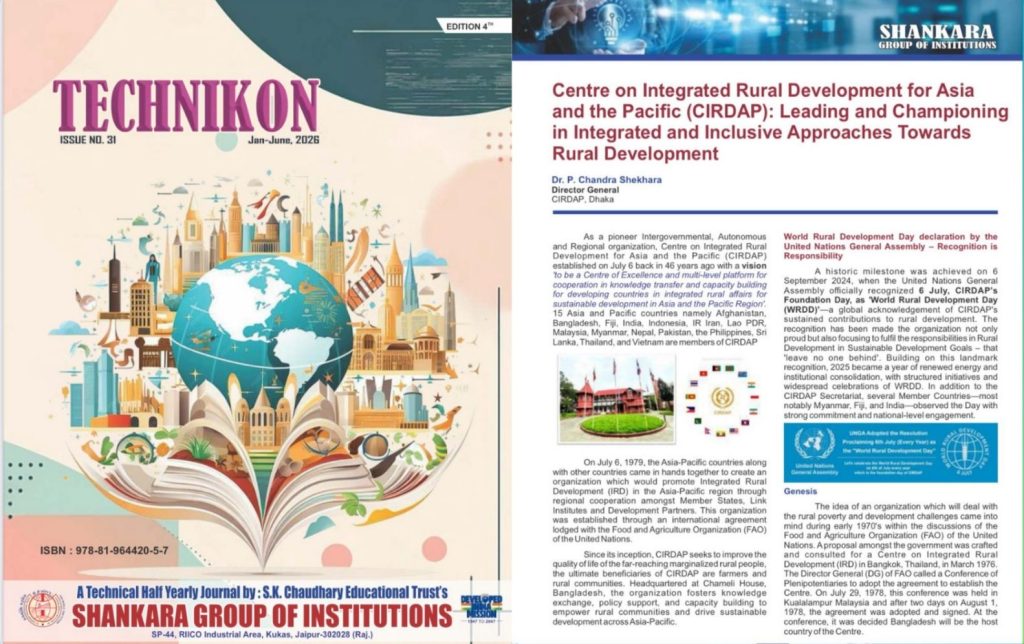
Leading the Charge for Inclusive Rural Prosperity: A Feature on CIRDAP in Technikon Journal

CIRDAP is honored to share that the latest edition of Technikon (January – June 2026, Issue 31), a prestigious half yearly journal by the SK Chaudhary Educational Trust and Shankara Group of Institutions, features an insightful article by our Director General, HE Dr. P. Chandra Shekara. In the article titled “CIRDAP: Leading and Championing in Integrated and Inclusive Approaches Towards Rural Development” (pages 15-20), Dr. Shekara outlines the strategic roadmap for transforming rural landscapes across the Asia-Pacific region. This feature highlights CIRDAP’s continued commitment to promoting innovative, inclusive, and sustainable approaches that empower rural communities across the Asia Pacific region. We extend our sincere appreciation to the publishers for recognizing CIRDAP’s efforts and providing a platform to share our vision and experiences with a wider academic and development audience. 🔗 See the journal: Click Here

Latest News

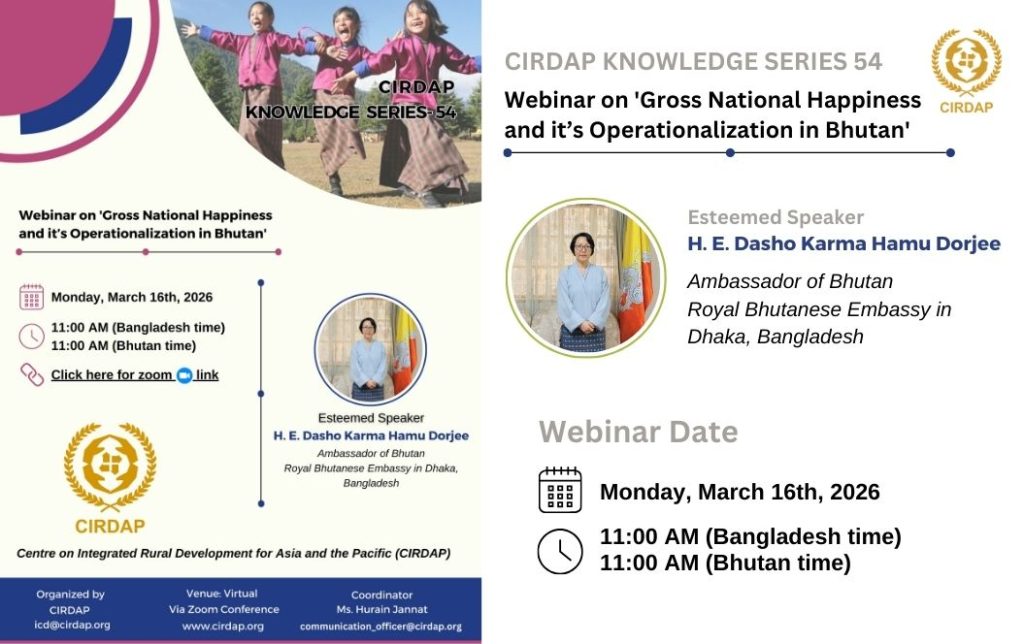
Webinar Announcement: ‘Gross National Happiness and its Operationalization in Bhutan

🌏 Join Our Webinar | March 16, 2026 Webinar on ‘Gross National Happiness and its Operationalization in Bhutan’ will be held on (Monday), March 16th, 2026, at 11:00 a.m. Bangladesh time (11:00 a.m. Bhutan time). Her Excellency Dasho Karma Hamu Dorjee, Ambassador of Bhutan, Royal Bhutanese Embassy in Dhaka, Bangladesh will be embraced as the esteemed speaker of the webinar. Notes on Happiness as a Development Goal: Lessons from Bhutan’s Gross National Happiness Model Gross National Happiness is a term coined by His Majesty the Fourth King of Bhutan, Jigme Singye Wangchuck in the 1970s. The concept implies that sustainable development should take a holistic approach towards notions of progress and give equal importance to non-economic aspects of wellbeing. The Gross National Happiness Index is a single number index developed from 33 indicators categorized under nine domains. The GNH Index is constructed based upon a robust multidimensional methodology known as the Alkire-Foster method. The concept of GNH has often been explained by its four pillars: good governance, sustainable socio-economic development, cultural preservation, and environmental conservation. Lately the four pillars have been further classified into nine domains to create widespread understanding of GNH and to reflect the holistic range of GNH values. The nine domains are: psychological wellbeing, health, education, time use, cultural diversity and resilience, good governance, community vitality, ecological diversity and resilience, and living standards. The domains represent each of the components of wellbeing of the Bhutanese people, and the term wellbeing here refers to fulfilling conditions of a “good life” as per the values and principles laid down by the concept of Gross National Happiness. Link to join: Topic: Webinar on ”Gross National Happiness and its Operationalization in Bhutan’ Time: Mar 16, 2026, 11:00 AM Dhaka Join Zoom Meeting https://zoom.us/j/99373436378?pwd=f6oPVnIKhNyJmdb7FH9z8JkASodSB0.1 Meeting ID: 993 7343 6378 Passcode: 224250 — Join instructions https://zoom.us/meetings/99373436378/invitations?signature=VQUzcHHaJm_2m0D4LmGJFGofTVMgLBgCIauXA3jH2eM Your participation and insights would be highly valuable.

Latest News

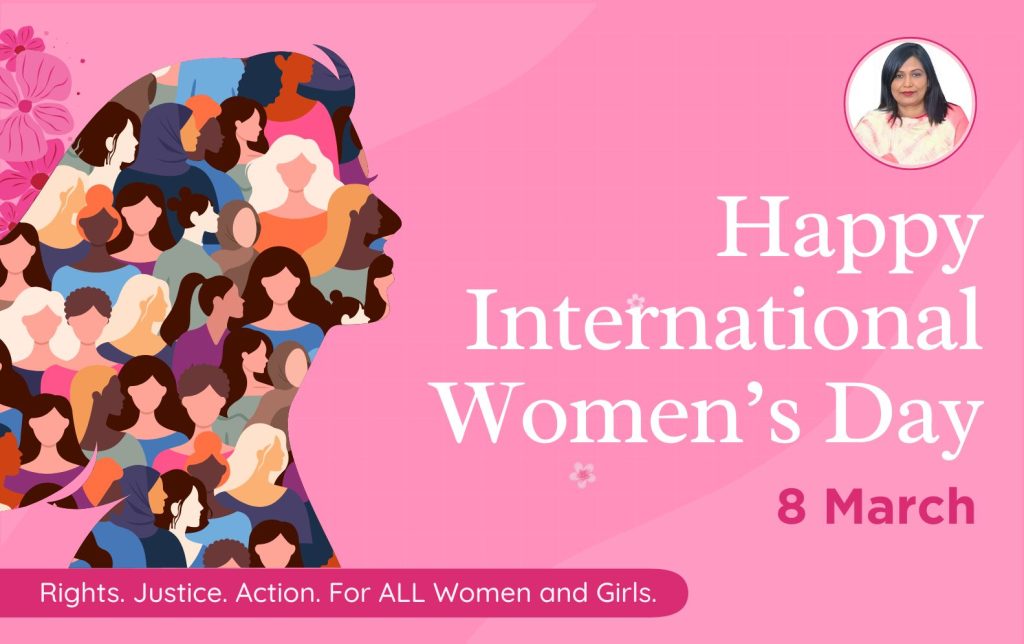
Ensure women’s rights in all spheres

“When women and girls are denied justice, the damage goes far beyond any single case. Public trust erodes, institutions lose legitimacy, and the rule of law itself is weakened. A justice system that fails half the population cannot claim to uphold justice at all.”– Sima Bahous, UN Women Executive Director Every year on March 8, the world pauses to honor the courage, resilience, and achievements of women across generations. International Women’s Day (IWD) is more than a celebration-it is a call to action, a reminder of struggles endured, and a challenge to dismantle the barriers that continue to deny women and girls their rights. This year, 2026, the UN Women theme is: “Rights. Justice. Action. For ALL Women and Girls”-focuses sharply on the persistent legal and social inequalities that continue to shape the lives of women globally. The roots of this day are deeply historical. In 1908, 15,000 women marched through the streets of New York, demanding shorter working hours, fair wages, and the right to vote. Two years later, in 1910, over 100 delegates from 17 countries gathered in Copenhagen for the Second International Conference of Working Women. At this historic gathering, Clara Zetkin, head of Germany’s Social Democratic Party Women’s Office, proposed an annual International Women’s Day-a single, worldwide day to champion women’s rights and amplify their voices. Her visionary idea was embraced unanimously, sowing the seeds for the IWD we honor today.The momentum continued. In 1917, Russian women struck for “Bread and Peace” on March 8, contributing to the Tsar’s abdication and paving the way for women’s suffrage. The United Nations officially recognized IWD in 1975, cementing its global significance as both a celebration and a platform for advocacy. Despite decades of progress, equality remains uneven. Globally, women hold only 64% of the legal rights of men (UN Women). Discriminatory laws, weak enforcement, societal bias, and gender-based violence continue to undermine equality. From sexual and reproductive health to economic participation, women face unique and often overlooked challenges shaped by social, cultural, and economic forces. Violence against women is alarmingly pervasive: nearly one in three women experience physical or sexual violence in their lifetime. UN Women’s 2026 report underscores the stakes: “When women and girls are denied justice, the damage goes far beyond any single case. Public trust erodes, institutions lose legitimacy, and the rule of law itself is weakened.” Rights on paper are not enough; justice must be tangible, and action must follow. In South Asia, the struggle for justice and equality takes on distinctive dimensions. Women often face barriers to education, economic independence, and safety, especially in rural communities. Yet they are also engines of change. Across India and Bangladesh, women are leading grassroots initiatives, running microfinance programs, managing farms, and taking charge of local governance. They advocate for safe workplaces, equal pay, and access to healthcare, proving that progress is possible even amid systemic challenges. In Bangladesh, women’s contributions are particularly remarkable. Millions are employed in the garment industry, powering the global economy while demanding fair wages and safer working conditions. Microfinance initiatives have empowered women to become entrepreneurs and community leaders. Education rates for girls are steadily rising, and rural women are increasingly assuming leadership roles in village councils and cooperatives. These stories illuminate the transformative impact of providing women with the tools, support, and rights they deserve. This International Women’s Day reminds us: rights are not enough without justice, and justice is not enough without action. To build a truly sustainable world for all women and girls, governments and institutions must actively dismantle structural barriers to equality: ending discriminatory laws, strengthening legal protections, and challenging harmful practices and social norms that erode women’s rights. IWD 2026 calls on all of us-governments, institutions, communities, and individuals-to act with intention and resolve. Justice systems must deliver equality: laws must protect women from violence and discrimination, courts must believe survivors, legal aid must be accessible, and support systems must facilitate recovery. Only when society chooses justice does progress become irreversible.In Bangladesh and India, where women are increasingly stepping into public, economic, and political roles, the future depends on reinforcing these gains while tackling persistent barriers to equality. International Women’s Day is a moment to reflect, celebrate, and mobilize. It reminds us that every legal reform, every act of advocacy, and every step toward equality matters. For students, educators, and citizens alike, it is a call to witness and participate in history: to learn, to act, and to ensure that no woman or girl is left behind. This March 8, we honor the courage of those who fought for the rights we enjoy, recognize the work that remains, and recommit to a world where justice, equality, and dignity are not privileges for some, but guaranteed for all women and girls. Writer: Dr. Usharani Boruah, librarian & gender coordinator, CIRDAP
Experts, List-1

Haseeb Ahmed Kiyani

Field of Interest :
Coastal management and tourism, climate change and sea-level rise, small islands, tsunami-impacted coasts and mangroves.

Experts, List-1

Aftab Alam Khan 

Field of Interest :
Coastal management and tourism, climate change and sea-level rise, small islands, tsunami-impacted coasts and mangroves.

Experts, List-1

Muhammad Arif Goheer

Field of Interest :
Coastal management and tourism, climate change and sea-level rise, small islands, tsunami-impacted coasts and mangroves.

Scroll to Top