CIRDAP – Enabling Rural Communities

Centre on Integrated Rural Development for Asia and the Pacific (CIRDAP)

An Intergovernmental & Autonomous Organization; Established in 1979, Mandated for Promoting & Strengthening Integrated Rural Development Systems for 15 Asia-Pacific Countries; Namely Afghanistan, Bangladesh, Fiji, India, Indonesia, IR Iran, Lao PDR, Malaysia, Myanmar, Nepal, Pakistan, Philippines, Sri Lanka, Thailand & Vietnam.

Author name: CIRDAP

E-News

International Training on Waste to Wealth – Value Recovery from Agro-processing in India

Organised by CIRDAP in collaboration with NIRD&PR, a ten-day long international training programme on Waste to Wealth – Value Recovery from Agro-processing was held during 19-28 March 2018 at NIRD&PR, Hyderabad, India. A total of 18 government officials [Out of 18 participants, 14 were male and seven were female] from 10 CIRDAP member countries (i.e. Bangladesh, India, Sri Lanka, Nepal, Myanmar, Thailand, Philippines, Indonesia, Fiji and Iran) participated in the training programme. The objectives of the training programme were: (i) To familiarize with agro-food processing wastes as valuable resources for industrial and domestic application; (ii) To identify the opportunities of agro-waste processing for poverty alleviation and sustainability of the rural development; (iii) To focus on the Asia-Pacific trends of value recovery from agro-processing, and to introduce different agro-food waste processing technique to address rural livelihood opportunities; (iv) To equip participants with the skills of project design, operation and maintenance (O&M), and management of waste management project; and (v) To explain the process and importance of information, education and communication (IEC), and Behavioral Change Communication (BCC) in waste management project. International Training on Waste to Wealth – Value Recovery from Agro-processing in India Mr. Tevita G Boseiwaqa Taginavulau, Director General of CIRDAP was the Chief Guest, and Dr. W. R. Reddy, Director General of NIRD&PR was the Chairperson of the closing session. Prof. Dr. Siva Ram of NIRD&PR was the Programme Director and Mr. Md. Zakaria of CIRDAP was the Programme Coordinator. In this training programme, a total of ten country papers were presented focusing on Waste to Wealth Value Recovery from Agro-processing. Participants learnt different types of waste management technologies and production procedures, such as leather shoes from chicken feet skin, salacca coffee made from snake fruit seed waste, cake made from tofu waste, compost and biogas from kitchen, cowhouse & cottage waste etc. At the end of the training programme, every country members presented and discussed what they learnt from this training programme and what should they do for their countries.

E-News

International Forum on Strengthening Food Safety Standards in Sri Lanka

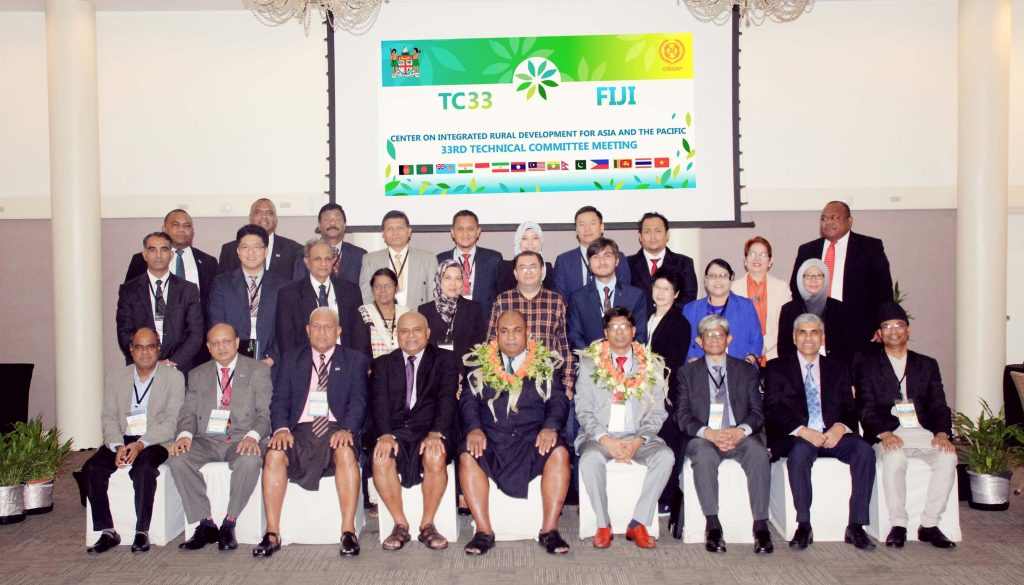
Food safety and quality standards are global concerns as they are important for public health and impact international trade. Consumers are increasingly concerned about the quality and safety of food and are taking unprecedented interest in the way food is produced, processed, and marketed while demanding greater quality and safety assurances from agribusinesses and food companies. Globalization of trade makes food chains longer and more complex and increases the risk of food safety incidents. Food producers and exporters of agri-food products in APO-CIRDAP member countries need to update the standards and requirements for certification. In this connection, CIRDAP organized an International Forum on Strengthening Food Safety Standards from 05-08 March 2018 at HARTI, Colombo, Sri Lanka. It was supported by the Asian Productivity Organization (APO) and HARTI. The objectives of the programme were: (i) To share recent developments, advanced knowledge, and emerging trends in food safety management (FSM) systems in major global markets; and (ii) To formulate strategic recommendations for food-industry SMEs to enable them to meet the FSM standards of advanced markets. International Forum on Strengthening Food Safety Standards in Sri Lanka March 2018 This forum was attended by 40 participants (26 overseas & 14 local, where 21 male & 19 female participant) from 15 countries, i.e. Bangladesh, Cambodia, Republic of China, Fiji, India, Indonesia, Islamic Republic of Iran, Malaysia, Mongolia, Nepal, Pakistan, Philippines, Sri Lanka, Thailand, and Vietnam. A total of nine (9) resource persons contributed on the forum through their presentations and knowledge sharing. The programme has been finished successfully through the knowledge session of resource persons, field activities, country presentations and enthusiastic participation of all participants. At the end of the programme, resources persons along with participants formulate strategic recommendations from four days discussion.

E-News

Certificate Award Ceremony

A certificate award ceremony for the participants of Bangladeshi Student Delegation Exposure Visitcum-Training Programme in India, which was organized by CIRDAP in association with the Rajiv Gandhi National Institute of Youth Development (RGNIYD) held from 02-06 January 2018, was taken place at CIRDAP International Conference Centre in Dhaka on 27 February 2018. Hon’ble Director General of CIRDAP handed over the certificates among the students. Two students also shared their experience in the ceremony.

E-News

Field Visit to the CIRDAP-PhilMech-DIU Project Site

The MOU-MOA on Technical Cooperation in Technology Transfer and Enterprise Development of Philippine Center for Postharvest and Mechanization under the Department of Agriculture was signed on 06 September 2017. This was acknowledged at the Embassy of the Republic of the Philippines, Consular Section, Dhaka Bangladesh in September 26, 2017. In line with the signing of MOU, the activity proposal, “Capacity Development: Up-valuing Agro-food enterprise of Selected-Bank Assisted Women’s Group” was finalized and duly signed on 23 November 2017 by the DG CIRDAP Mr. Tevita G. Boseiwaqa Presentation on Panchayat Governance – Strength of India by Mr. Elango. Field Visit to the CIRDAP-PhilMech-DIU Project Site Taginavulau and by the Daffodil International University (DIU) Registrar Prof. Dr. Engr. A.K.M. Fazlul Hoque. In this connection, the field visit was undertaken on 03 January 2018 to CIRDAP-PhilMech-DIU Project Site located at DIU, which was spearheaded and attended by Eva Benita A. Tuzon (Director, PPD, CIRDAP) and Ms. Najiba Rashid (CIRDAP Intern) along with Dr. Bellal Hossain with two DIU project focal experts Dr. Md. Rezaul Karim and AKM Sarwar Inam. The final (tentative) target dates of implementation were set from 19 February to 06 March 2018.

E-News

Bangladeshi Student Delegation Exposure Visit-cum-Training Programme in India

Organized by CIRDAP in collaboration with the Rajiv Gandhi National Institute of Youth Development (RGNIYD), a five day-long Exposure Visit-cum-Training Programme in India for Bangladeshi Student Delegation took place during 02-06 January 2018. The delegation was comprised of a total of 20 students from top leading public and private universities of Bangladesh. The programme started with an inauguration programme, where Prof. Madan Mohan Goel, Director of RGNIYD graced the occasion as Chief Guest. Prof. Dr. Vasanthi Rajendran, Head, Centre for National and International Collaboration, RGNIYD welcomed the guests and described the programme brief. CIRDAP’s Coordinator of the Programme, Mr. Mohammad Abu Saleh Siddique handed over the CIRDAP Crest and a set of recent CIRDAP publications to Mr. Goel on behalf of the Director General of CIRDAP. Objectives: The objectives of the programme were to create an international perspective among the youth against the backdrop of the national youth policy objectives, inter-alia; involve them in promoting peace and development understanding in the society; and promote exchanging of ideas, values and culture as well as to develop international understanding among the youth of Bangladesh and India. Bangladeshi Student Delegation Exposure Visit-cum-Training Programme in India Visit to Rajiv Gandhi Memorial. Highlights of the Training and Exposure Visits: On the first day of the programme, presentations were made on RGNIYD, National Youth Policy 2014 and India Youth Development Index 2017 by Prof. Dr. Vasanthi Rajendran; on Life Skills by Dr. Kumaravel, Assistant Professor, RGNIYD, on ‘CIRDAP – A Centre of Excellence’ by Mr. Saleh Siddique, and orientation on Community Radio and Central Library of RGNIYD; Visit to the Rajiv Gandhi Memorial; Visit to Kuthambakkam Village Panchayat (a model village which is renowned for the role of youth participation in village development and panchayat system, Trust for Village Self Governance as well as Self-sufficiency practice); Visit to the Government College of Architecture and Sculpture at Mamallapuram;  Visit to the Cultural and Heritage Centres at Mahabalipuram including Krishna’s Butter Ball, Sea Shore Temple and Mahabalipuram Beach; Visit to the Electronic and Multimedia Research Centre under Anna University (wherein the students had the opportunity to know about the Production of Multi-media Learning Material, E-Learning Content and Community, and Campus Radio Activities); Visit to the M. S. Swaminathan Research Foundation (i.e. Centre for Research on Sustainable Agricultural and Rural Development) Visit to the Marina Sea Beach; Visit to the Tidel Park – One of the largest IT parks in Asia; Visit to the Bharatiya Yuva Shakti Trust – A Mentoring Young Entrepreneurs; and Visit to the Dakshina Chitra – A Living-History Museum in Tamil Nadu.

E-News

International Training Programme on Social Audit for Rural Development Programmes

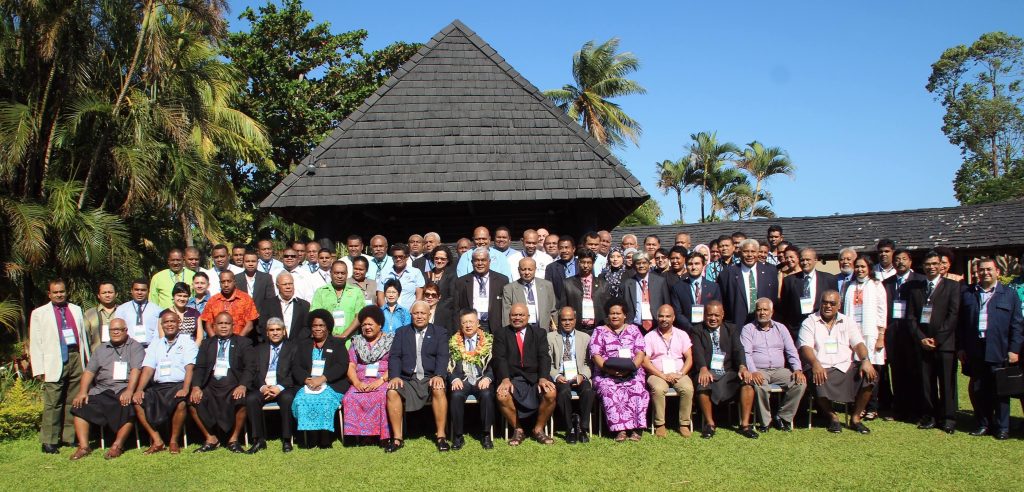
CIRDAP in collaboration with NIRD&PR organized an international training programme on Social Audit for Rural Development Programme at Nay Pyi Taw in Myanmar during 15-24 January 2018. A total of 21 participants from Bangladesh, Fiji, Iran, Nepal, Pakistan, Sri Lanka, and Myanmar (host country) and four resource/facilitators converged at the My Taw Win hotel where the aforementioned training programme took place. The programme is designed to ensure transparency, good governance, responsiveness and accountability. Social audit is a tool for social accountability mechanism that empowers the people in communities to be able to participate in planning, decision making, implementation, monitoring and evaluation of projects. Objectives: The objectives of the programme were to: (a) discuss the need, concept and approaches of social accountability mechanism in general and social audits in particular; (b) make the participants understand the provisions of different rural develop programmes with reference to social accountability mechanisms; International Training Programme on Social Audit for Rural Development Programmes January-February 2018 (c) enable the participants understand and critically review the approach and practice of social audit; (d) expose the participants to the best practices of social audit in rural development programmes in India; and (e) have hands on experience by conducting one mock social audit in one village. Major Training Activities: (a) The programme was inaugurated by Dr. Tin Htut as Permanent Secretary of the Ministry of Agriculture, Livestock and Irrigation (MoALI), Government of Myanmar. Mr. Tomasi Raiyawa stressed the importance of ‘leadership’ on behalf of DG CIRDP in the programme. (b) The training began with a presentation from Myanmar’s Ministry of Agriculture, Livestock and Irrigation Department of Rural Development on Poverty Reduction Scenario of Myanmar. (c) Country representatives presented their individual country reports. (d) Then Dr. Dheeraja and Mr. Karuna Muthih presented lectures on Social Audit through PPT and video presentations. (e) Towards the end of the programme, participants went on a field trip to discuss with the people through mock exercise on how to conduct social audit. (f) And among others, Evaluation of the programme through Pre-test Form and Post-test Form by the participants.

Experts, List-2

Sonal Mobar Roy

Field of Interest :
Social Anthropology, Sociology of Health and Education, Culture and Tribal Studies, Rural Development, and Ethnography, Teaching, training and research.

CMC Updates

Food insecurity: We need to act now

ARATI JOSHI.The Himalayan Times: March 28, 2018. Nepal   United Nations says food production must double by 2050 to meet the demand of the world’s growing population and innovative strategies are needed to help combat hunger Illustration: RatnaSagarShrestha/THT We are living in technologically advanced era today when people are aiming to settle in the moon. But there are some harsh realities when it comes to feeding millions of people on the earth. Food security has emerged as a major global challenge today with nearly 800 million people in the world facing hunger. While the urban population is changing their diet from traditional to “healthier low-fat food”, in some parts, many people are deprived of basic nutrition. It is estimated that about 1.3 billion ton of food is wasted across the world every year. Every five seconds a child under five dies because of hunger, or of directly related causes. Those who survive face severe malnutrition, which is a major cause of death. A report has revealed that nearly half of all deaths in children under five are attributable to under-nutrition, which results in the loss of about three million young lives a year. If we go through the statistics, the number of people suffering from hunger went up by 75 million in 2007 and by 40 million in 2008. In 2016, the number of people affected by hunger reached 815 million or 11 per cent the global population. Similarly, the number of undernourished people in the world went up 1.04 times in 2016 than that was in 2015. The increased hunger and malnutrition is attributed to poverty, increase in food prices, climate change, natural disasters and conflicts. Hunger is the world’s no.1 health risk. It kills more people every year than AIDS, malaria and tuberculosis combined. One in seven people in the world go to bed hungry. Asia and the Pacific region is home to over half the world’s population and nearly two thirds of the world’s hungry people. Around 65 percent of the world’s hungry live in only seven countries: India, China, the Democratic Republic of Congo, Bangladesh, Indonesia, Pakistan and Ethiopia. There is the problem of food insecurity not because the world does not produce enough to feed the population. But it emanates from the fact that food produced in one region is not made available in the other areas. Most of the people in the world are facing hunger because they have a very low purchasing ability. Conflict is yet another challenge that has emerged as a grave problem, contributing to food insecurity. The conflict in Asia makes it the continent with the most hungry people – two thirds of the total. However, Sub-Saharan Africa is the region with the highest prevalence (percentage of population) of hunger. And climate change is hugely contributing to food insecurity due to increase in temperatures, erratic weather pattern, infestation of disease and pest, invasion of weeds, pest and diseases and by many other ways. The surplus food production of one region should be made available in food deficit regions in such way that they it is accessed even by the most disadvantaged group. To ensure proper access, there is a need of developing effective distribution systems and market channels and increasing investment to output market. Food security-friendly import-export policy should be introduced. To solve the problem of food insecurity, we not only should focus on food system but also on other factors that are related to food security. The attributing factors are women’s education, women’s active participation in agricultural activities, lifestyle, culture, access to health services and basic sanitation among others. These factors are positively correlated with food security. The Food and Agriculture Organisation estimates that if women had the same access to productive resources as men, women could boost yield by 20-30 per cent, increasing the overall agricultural output in developing countries by 2.5-4 per cent. This gain in production could lessen the number of hungry people in the world by 12-17 per cent besides increasing women’s income. The countries that are empowering women tend to see lower rates of stunting (low height for age), the primary measure of chronic under-nutrition. Enhancing women’s control over decision-making in the household translates gender equality into better prospects and greater well-being of children, reducing malnutrition and poverty of future generations. Post-harvest loss of food is also a major factor causing food wastage. Global organisations have been lobbying with regional and local organisations to reduce the hunger and food insecurity problem to a significant level. The United Nations has been developing several strategies to promote activities against food insecurity. MDG and SDG have been the major strategic tools through which the UN has planned to reach its goal. Similarly, the World Food Programme and others have been actively working to achieve the goal of zero hunger. The UN says food production must double by 2050 to meet the demand of the world’s growing population and innovative strategies are needed to help combat hunger. We must think and act even more boldly and innovatively to accelerate viable solutions for achieving food security more quickly on a global scale.

CMC Updates

A New Poverty Reduction Perspective

The Independent, 28 March, 2018, Bangladesh SarminAkther In order to reduce poverty, rather than attempting to change the “culture of poverty” “structural trap” should be removed   In a recent article published in the World Journal of Science, Technology and Sustainable Development, Dr. KhurshedAlam of Bangladesh argued that the universal approaches in poverty reduction may not be applicable rather country-specific approach needs to be evolved and followed. Scholars from both developed and developing nations paid high attention to understand the reasons of prevailing poverty for poverty reduction. Two explanations of poverty were highlighted, one being the “poverty trap theory” covering “structural trap” and “kinship trap theory,” and the other being the “culture of poverty theory.” The structural poverty trap theory blames the rich, where the kinship trap and culture of poverty theory blames the poor. Hence, the two major grand theories contradict each other and none of the theories give any solution to the problem of poverty. In addition to these, colonialism, new-colonial society, dependency theory, and world system are some other theoretical stands which did not get much attention from mainstream scholars. Scholars have considered their theories sufficient to explain the poverty condition. His paper argues that the two theories mentioned above are not necessarily applicable in each country. This idea goes hand in hand with the statement of Nobel Laureate Douglas North that economies that adopt the formal rules of another economy will have different performance characteristics than the first economy because of different informal norms and enforcement. In order to reduce poverty, rather than attempting to change the “culture of poverty,” remove the “structural trap,” or “kin system as poverty trap” it can be achieved through harnessing the enabling factors of poverty reduction. Every country has its enabling factors that contribute the most to reduce poverty, despite the existence of hindrances. Thus a country needs to focus on its ‘potential’ factors of poverty reduction, rather than focusing on “barriers” to poverty reduction. Instruments of poverty reduction have revealed in his paper where a usual practice is to identify the barrier to development and to suggest the means of overcoming those barriers. A means of poverty reduction also being suggested where country-specific strategy or home-grown model can be drawn out based on the identification of potential factors. It suggests how to look into the issue from another way round; instead of identifying the barrier attempt should be made to identify the enabling factors and to harness those enabling factors. He has identified the factors which are instrumental to poverty reduction opposed to many factors that are considered as impediments to poverty reduction in a poor country like Bangladesh. Bangladesh could substantially move forward in the case of overall poverty reduction. The Household Income and Expenditure Surveys conducted by the Bangladesh Bureau of Statistics (2011) gives the statistics of the incidence of poverty faced by Bangladeshi people using the poverty headcount ratio method. The report shows that under the Pakistani rule, the national poverty rate in 1963-1964 was 33.1 percent, which sincreased to 46.4 percent right after liberation in 1973-1974. The trend of poverty has been increasing since then, reaching the highest rate of 71.2 percent in 1981-1982. Poverty rate was 56.6 percent in 1991-1992. Since then, the rate has been declining, reaching 31.5 percent in 2010, and is estimated to be 26 percent in 2014. Population suffering from extreme poverty in 2014 was 10.64 percent whereas it was 17.6 percent in 2010. He further mentioned that out of 64 districts, 12 (18.75 percent) had less than 10 percent of it’s population suffering from the extreme poverty whereas four (6.25 percent) had less than only 5 percent. Though the rate of decline in the poverty level is quite high in the urban areas compared to that of the rural areas, it is quite clear that at the national level, poverty is dominated more by the rural areas. This can be explained by the fact that despite the growing urbanization, around 67 percent of the population lives in the rural areas. Therefore, in order to have a stronger impact on poverty eradication at the national level, it is important to take poverty reduction measures targeting the rural population. In Bangladesh, poverty reduction would be possible through agricultural development and remittance. The utilization of land and labor could bring a transformation in the rural economy of Bangladesh which is essential to poverty reduction. Individuals here can escape poverty largely through their own effort where a proper policy support from the government is needed. The state needs to play the facilitating role rather than the instrumental in the case of poverty reduction. Thus the statement of Former US Ambassador in Bangladesh Dan Mozena, “Bangladesh would transform from the ‘bottomless basket’ to an ‘overflowing basket’ very soon” would turn into a reality.   The writer is a Research Officer of Bangladesh Institute of Social Research Trust. Email akther.sarmin101@gmail.com

Scroll to Top