














CIRDAP – Enabling Rural Communities

Centre on Integrated Rural Development for Asia and the Pacific (CIRDAP)

An Intergovernmental & Autonomous Organization; Established in 1979, Mandated for Promoting & Strengthening Integrated Rural Development Systems for 15 Asia-Pacific Countries; Namely Afghanistan, Bangladesh, Fiji, India, Indonesia, IR Iran, Lao PDR, Malaysia, Myanmar, Nepal, Pakistan, Philippines, Sri Lanka, Thailand & Vietnam.

CMC Updates

CMC Updates, Latest News

Memorandum of Understanding (MoU) signed between CIRDAP and SFIDA

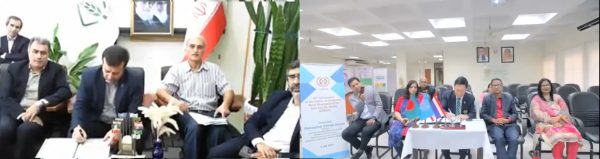
A Memorandum of Understanding (MoU) was signed between the Centre on Integrated Rural Development for Asia and the Pacific (CIRDAP) and Supporting Funds of Investment Development in Agriculture (SFIDA) of IR Iran on 5th July, 2023 in a virtual ceremony. This online event was a part of the 44th celebration of the foundation day of CIRDAP (6th July). The cooperation between the two organizations are for sharing best knowledge and practices, capacity building, success stories in the field of farmer;s fund, credit and finance, village and cooperative funds, local and rural banks, policy dialogue and expert consultation workshops, expert database, and partnership with regional and international organizations. The MoU will be valid for 3 consecutive years from 5 July 2023 to 4 July 2026. On behalf of CIRDAP the DG of CIRDAP, Dr. Cherdsak Virapat welcome all SFIDA executive members and extended his sincere heartfelt appreciation to the Chair and CEO of SFIDA Mr. Hossein Mahdidous t for his leadership and cooperation with CIRDAP in this matter. He said, “Let us celebrate together on our proposed joint cooperation and activities and on strengthening our relationship with commitment on our future collective actions which will ultimately improve the quality of life and economic development of rural communities in Asia and the Pacific region”. Later, on behalf of SFIDA, the Chair and CEO of SFIDA Mr. Mahdidoust provided a speech by congratulating CIRDAP on the occasion of the 44th anniversary. He also thanked the DG of CIRDAP for showing interest to collaborate with SFIDA as part of his holistic programme of exchange the experiences among the CIRDAP Member countries. He believed that this MOU as a mean would facilitate the joint collaborations of the sharing good practices. At the end of the ceremony both the head of the organizations signed the Memorandum of Understanding (MoU). This MoU is valid for three consecutive years with the objective of collaboration of sharing the good experiences with/from CIRDAP member countries. There are six areas of cooperation for SFIDA and ten for CIRDAP.  

CMC Updates, Latest News

Climate Change is Challenging the Rural Livelihoods

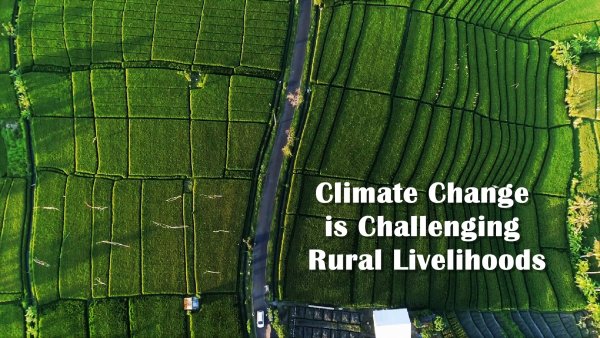
Climate change is negatively affecting agriculture, food production and rural livelihoods in general. CIRDAP Rural Development Report titled Impacts of Climate Change on Rural Livelihoods suggests that climate change change is negatively affecting agriculture, food production and rural livelihoods in general. It may intensify the pressure on available resources and ecosystem and trigger a vicious cycle of poverty, resource degradation, environmental deterioration and social unrest. The report recommends creation of new employment opportunities particularly in non-farm sectors through promotion of agro-processing industries and rural entrepreneurship etc. as way to diversify livelihood.Watch this Video on YouTube: https://bit.ly/2BL0WBr Read the full report: www.cirdap.org/ccrl  

CMC Updates, Latest News

International Exposure visit on Rural Development and Micro-finance

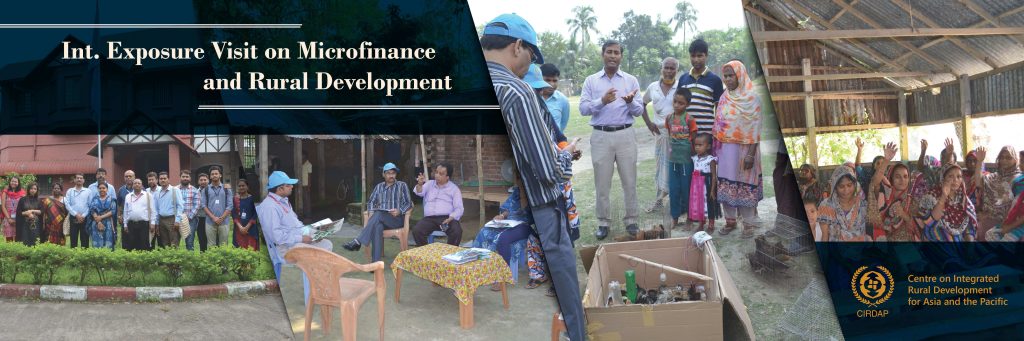
CIRDAP in collaboration with The National Institute of Rural Development and Panchayati Raj (NIRD&PR) organized an international exposure visit on rural development and Microfinance in Bangladesh on 23-27 September 2018. The exposure visit was organized for capacity building of the faculties of NIRDPR, which is the CIRDAP Link Institution in India mandated to work for capacity development of rural development functionaries, elected representatives of Panchayati Raj Institutions (PRI), bankers, NGOs and other stakeholders of rural development through inter-related activities of training, research and consultancy. The programme was attended by senior and mid-level officials of NIRDPR and State-State Institute of Rural Development (SIRDs). Social Development, Micro Finance and Rural Development has been chosen as focus of the exposure visit since success of microfinance and rural development in Bangladesh has generated immense interest in the world. The key objectives of the exposure visit were: To promote exchange of knowledge and expertise on social development, Microfinance and the banking systems for the poor in Bangladesh To promote exchange of expertise on rural development action research projects in Bangladesh To promote collaboration among rural development functionaries in Bangladesh and India DG CIRDAP welcomed the delegation of NIRDPR and SIRDs through a special dinner on 22nd September,2018. On the 1st day of exposure visit, they team visited BRAC focusing on social development programme namely targeting the ultra poor (TUP) and Skill Development Programme (SDP). On the 2nd day, they visited Grameen Bank focusing their activities of Bank of the Poor and followed by this, they attended a meeting with Dr. Mustafa K. Mujeri, Executive Director, Institute for Inclusive Finance and Development (InM) on the 3rd day of exposure regarding microfinance activities in Bangladesh. As a part of this exposure visit programme a field visit was arranged in RDA, Bogura one of the finest academy in Bangladesh for action research programme on rural development. The visit to RDA rural development action research project started from 25th September followed by other activities including idea exchange session with RDA Faculty members. During the two days’ visit in RDA the team exposed with the following projects: Indigenous Chicken Rearing Model at Ranabirbala; Water Saving Project (WSP) at Juanpur; Rural Housing Model at Jamalpur; Community Biogas Model at Bamunia; Maria Seed Technology Model at Maria; and Integrated Water Management (IWM) Model at Bograpara. Besides, the team also visit country’s one of the largest Non-Governmental Organization viz. Thengamara Mohila Sabuj Sangha (TMSS) and some of RDA Centers namely- Chars Development Research Center (CDRC); Cattle Research and Development Center (CRDC); and Community Development Center (CDC). After completion of RDA Project Exposure, a wrap up was held in presence of DG-RDA and CIRDAP Officials. During that session the team express their views, thoughts, suggestions and recommendations regarding the projects and programmes. It is expected that the renewed commitment for collaborations among rural development functionaries in Bangladesh and India through this programme will strengthen the rural development initiatives in the region.

CMC Updates, Latest News

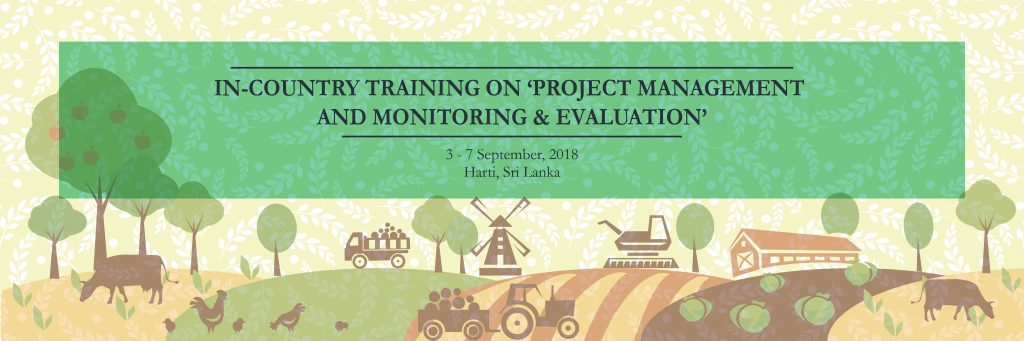
In-country Training on ‘Project Management and Monitoring & Evaluation

CIRDAP in collaboration with HARTI organised an in-country training programme on ‘Project Management and Monitoring & Evaluation’ for the officials of HARTI and the Ministry of Agriculture. The programme was held on 3rd to 7th September 2018 in HARTI’s campus, Colombo, Sri Lanka. Hon. State Minster of Agriculture Mr. Wasantha Aluvithare inaugurate the programme along with Secretary of Agriculture Mr. B. Wijayaratne, Secretary of State Ministry Mr. D.V. Bandulasema and Director HARTI Mr. Karunadasa Udage; Director General, CIRDAP  has attended the inaugural and closing session. Total 24 participants from Ministry of Agriculture and HARTI was participated in the 5 day long training programme.

CMC Updates, Latest News, Uncategorized, Upcoming Programmes

Indian Technical and Economic Cooperation (ITEC) Fellowship Programme 2018-19

The Indian Technical and Economic Cooperation (ITEC) Programme was instituted in 1964 for developing Human Recourse for the Government of India. Later on, its activities have also been associated with several regional and multilateral organizations and cooperation groupings like ASEAN, BIMSTEC, AARDO, MGC, etc. In connection with this, from 2013 CIRDAP also being affiliated with Government of India in ITEC Programme. The Indian Government have sponsored twenty (20) slots of this fellowship under CIRDAP Secretariat. Each year CIRDAP ambit different courses under this programme and offer fellowship for the Government Officials of its member countries. As a gesture of regional cooperation to develop human resources for the fiscal year 2018-19 CIRDAP is offering the following courses for fellowship. Sl. Institute Course Name Start Date End Date 1. IIPA Climate Change and Governance 22-10-2018 02-11-2018 2. NIRD Good Governance for Management of Rural Development Programmes 22-10-2018 18-11-2018 3. CIFT Extension Management Techniques for up-scaling Technology Dissemination on Fisheries 09-11-2018 22-11-2018 4. RISDC Development Partnership: Learning South-South Cooperation (LSSC) 12-11-2018 23-11-2018 5. NIRD Community Driven Rural Development 19-11-2018 16-12-2018 6. NISE International Training Programme on Solar Technologies and Applications 26-11-2018 14-12-2018 7. GSITI Geographic Information System for Geoscientists 10-01-2019 06-02-2019 8. NIRD Participatory Planning for Poverty Reduction and Sustainable Development 18-02-2019 17-03-2019 9. NIRD Sustainable Agriculture Strategies for Rural Development 21-01-2019 17-02-2019 10. NIRD Training Methodology for Development Professionals 21-01-2019 17-02-2019 For applying in any of these courses under CIRDAP Secretariat please click here (https://www.itecgoi.in/stream_list.php) Before starting the application process, kindly read the “Application Procedure” very carefully. CLICK HERE Relevant Documents: (i) Application Procedure (ii) Nomination Form

CMC Updates

Stakeholders Share Ideas On Rural Development Policy

Chinese Ambassador to Fiji Qian Bo (left) in discussion with Permanent Secretary Meleti Bainimarama (center) at the rural development symposium at the Tanoa International, Hotel, Nadi, on April 16, 2018. Photo: DEPTFO   Fiji’s strength, much like China’s, lies in the rural agricultural sector, says the Chinese Ambassador to Fiji, Qian Bo. Mr Qian was attending a Rural Development Symposium yesterday in Nadi, contributing to discussions with various other stakeholders on how to boost rural development in Fiji. Mr Qian said the Fijian Government’s five-year and 20-year National Development Plan consisted of two prongs: ‘Inclusive social-economic development” and “transforming strategic thrusts.’ He said Chinese President Xi Jinping placed great importance on rural issues such as agriculture. “He pointed out that if China wants to be strong, agriculture must be strong, if China wants to be beautiful, the country side must be beautiful and If China wants to get rich, the farmers must get rich.” Mr Qian related these points to the current progression and the attitude that must be driven to Fiji’s rural agricultural sector. Permanent Secretary for Rural and Maritime Development, National Disaster Management and Meteorological Services Meleti Bainimarama said the theme was “a reflection of the ministry’s vision to assist the rural populace in improving their livelihoods, living standards and create an enabling environment for effective governance. “It is something that goes hand in hand with the government’s 20-year development plan and the ministry’s three-year strategic plan,” Mr Bainimarama said. He said they would be using the symposium as a platform to get feedback from various stakeholders. He said ideas on how better roads could be built, getting better regional water plans, accessing electricity and simplifying accessibility for members of the public to these basic services were discussed. Source: Fiji Sun Online | April 17, 2018 | Link: http://fijisun.com.fj/2018/04/17/stakeholders-share-ideas-on-rural-development-policy/

CMC Updates

Food insecurity: We need to act now

ARATI JOSHI.The Himalayan Times: March 28, 2018. Nepal   United Nations says food production must double by 2050 to meet the demand of the world’s growing population and innovative strategies are needed to help combat hunger Illustration: RatnaSagarShrestha/THT We are living in technologically advanced era today when people are aiming to settle in the moon. But there are some harsh realities when it comes to feeding millions of people on the earth. Food security has emerged as a major global challenge today with nearly 800 million people in the world facing hunger. While the urban population is changing their diet from traditional to “healthier low-fat food”, in some parts, many people are deprived of basic nutrition. It is estimated that about 1.3 billion ton of food is wasted across the world every year. Every five seconds a child under five dies because of hunger, or of directly related causes. Those who survive face severe malnutrition, which is a major cause of death. A report has revealed that nearly half of all deaths in children under five are attributable to under-nutrition, which results in the loss of about three million young lives a year. If we go through the statistics, the number of people suffering from hunger went up by 75 million in 2007 and by 40 million in 2008. In 2016, the number of people affected by hunger reached 815 million or 11 per cent the global population. Similarly, the number of undernourished people in the world went up 1.04 times in 2016 than that was in 2015. The increased hunger and malnutrition is attributed to poverty, increase in food prices, climate change, natural disasters and conflicts. Hunger is the world’s no.1 health risk. It kills more people every year than AIDS, malaria and tuberculosis combined. One in seven people in the world go to bed hungry. Asia and the Pacific region is home to over half the world’s population and nearly two thirds of the world’s hungry people. Around 65 percent of the world’s hungry live in only seven countries: India, China, the Democratic Republic of Congo, Bangladesh, Indonesia, Pakistan and Ethiopia. There is the problem of food insecurity not because the world does not produce enough to feed the population. But it emanates from the fact that food produced in one region is not made available in the other areas. Most of the people in the world are facing hunger because they have a very low purchasing ability. Conflict is yet another challenge that has emerged as a grave problem, contributing to food insecurity. The conflict in Asia makes it the continent with the most hungry people – two thirds of the total. However, Sub-Saharan Africa is the region with the highest prevalence (percentage of population) of hunger. And climate change is hugely contributing to food insecurity due to increase in temperatures, erratic weather pattern, infestation of disease and pest, invasion of weeds, pest and diseases and by many other ways. The surplus food production of one region should be made available in food deficit regions in such way that they it is accessed even by the most disadvantaged group. To ensure proper access, there is a need of developing effective distribution systems and market channels and increasing investment to output market. Food security-friendly import-export policy should be introduced. To solve the problem of food insecurity, we not only should focus on food system but also on other factors that are related to food security. The attributing factors are women’s education, women’s active participation in agricultural activities, lifestyle, culture, access to health services and basic sanitation among others. These factors are positively correlated with food security. The Food and Agriculture Organisation estimates that if women had the same access to productive resources as men, women could boost yield by 20-30 per cent, increasing the overall agricultural output in developing countries by 2.5-4 per cent. This gain in production could lessen the number of hungry people in the world by 12-17 per cent besides increasing women’s income. The countries that are empowering women tend to see lower rates of stunting (low height for age), the primary measure of chronic under-nutrition. Enhancing women’s control over decision-making in the household translates gender equality into better prospects and greater well-being of children, reducing malnutrition and poverty of future generations. Post-harvest loss of food is also a major factor causing food wastage. Global organisations have been lobbying with regional and local organisations to reduce the hunger and food insecurity problem to a significant level. The United Nations has been developing several strategies to promote activities against food insecurity. MDG and SDG have been the major strategic tools through which the UN has planned to reach its goal. Similarly, the World Food Programme and others have been actively working to achieve the goal of zero hunger. The UN says food production must double by 2050 to meet the demand of the world’s growing population and innovative strategies are needed to help combat hunger. We must think and act even more boldly and innovatively to accelerate viable solutions for achieving food security more quickly on a global scale.

CMC Updates

A New Poverty Reduction Perspective

The Independent, 28 March, 2018, Bangladesh SarminAkther In order to reduce poverty, rather than attempting to change the “culture of poverty” “structural trap” should be removed   In a recent article published in the World Journal of Science, Technology and Sustainable Development, Dr. KhurshedAlam of Bangladesh argued that the universal approaches in poverty reduction may not be applicable rather country-specific approach needs to be evolved and followed. Scholars from both developed and developing nations paid high attention to understand the reasons of prevailing poverty for poverty reduction. Two explanations of poverty were highlighted, one being the “poverty trap theory” covering “structural trap” and “kinship trap theory,” and the other being the “culture of poverty theory.” The structural poverty trap theory blames the rich, where the kinship trap and culture of poverty theory blames the poor. Hence, the two major grand theories contradict each other and none of the theories give any solution to the problem of poverty. In addition to these, colonialism, new-colonial society, dependency theory, and world system are some other theoretical stands which did not get much attention from mainstream scholars. Scholars have considered their theories sufficient to explain the poverty condition. His paper argues that the two theories mentioned above are not necessarily applicable in each country. This idea goes hand in hand with the statement of Nobel Laureate Douglas North that economies that adopt the formal rules of another economy will have different performance characteristics than the first economy because of different informal norms and enforcement. In order to reduce poverty, rather than attempting to change the “culture of poverty,” remove the “structural trap,” or “kin system as poverty trap” it can be achieved through harnessing the enabling factors of poverty reduction. Every country has its enabling factors that contribute the most to reduce poverty, despite the existence of hindrances. Thus a country needs to focus on its ‘potential’ factors of poverty reduction, rather than focusing on “barriers” to poverty reduction. Instruments of poverty reduction have revealed in his paper where a usual practice is to identify the barrier to development and to suggest the means of overcoming those barriers. A means of poverty reduction also being suggested where country-specific strategy or home-grown model can be drawn out based on the identification of potential factors. It suggests how to look into the issue from another way round; instead of identifying the barrier attempt should be made to identify the enabling factors and to harness those enabling factors. He has identified the factors which are instrumental to poverty reduction opposed to many factors that are considered as impediments to poverty reduction in a poor country like Bangladesh. Bangladesh could substantially move forward in the case of overall poverty reduction. The Household Income and Expenditure Surveys conducted by the Bangladesh Bureau of Statistics (2011) gives the statistics of the incidence of poverty faced by Bangladeshi people using the poverty headcount ratio method. The report shows that under the Pakistani rule, the national poverty rate in 1963-1964 was 33.1 percent, which sincreased to 46.4 percent right after liberation in 1973-1974. The trend of poverty has been increasing since then, reaching the highest rate of 71.2 percent in 1981-1982. Poverty rate was 56.6 percent in 1991-1992. Since then, the rate has been declining, reaching 31.5 percent in 2010, and is estimated to be 26 percent in 2014. Population suffering from extreme poverty in 2014 was 10.64 percent whereas it was 17.6 percent in 2010. He further mentioned that out of 64 districts, 12 (18.75 percent) had less than 10 percent of it’s population suffering from the extreme poverty whereas four (6.25 percent) had less than only 5 percent. Though the rate of decline in the poverty level is quite high in the urban areas compared to that of the rural areas, it is quite clear that at the national level, poverty is dominated more by the rural areas. This can be explained by the fact that despite the growing urbanization, around 67 percent of the population lives in the rural areas. Therefore, in order to have a stronger impact on poverty eradication at the national level, it is important to take poverty reduction measures targeting the rural population. In Bangladesh, poverty reduction would be possible through agricultural development and remittance. The utilization of land and labor could bring a transformation in the rural economy of Bangladesh which is essential to poverty reduction. Individuals here can escape poverty largely through their own effort where a proper policy support from the government is needed. The state needs to play the facilitating role rather than the instrumental in the case of poverty reduction. Thus the statement of Former US Ambassador in Bangladesh Dan Mozena, “Bangladesh would transform from the ‘bottomless basket’ to an ‘overflowing basket’ very soon” would turn into a reality.   The writer is a Research Officer of Bangladesh Institute of Social Research Trust. Email akther.sarmin101@gmail.com

CMC Updates

Great Need for Agricultural Statistics System

Fiji Sun. 22-03-2018. Fiji From left: Outgoing Chair, Bhutan Ministrty of Agriculture and Forest ChenchoDupka, Ministry of Agriculture PS David Kolitagane, Minister for Industry, Trade, Tourism, Lands and Mineral Resources FaiyazKoya, Assistant Minister for Agriculture ViamPillay, FAO chief statistician PietroGennari, and APCAS secretary MukeshSrivastava at the opening ceremony of the 27th Session of Asia and Pacific Commission on Agricultural Statistics (APCAS) at the Sheraton Resort, Denarau, Nadi, on March 19, 2018. Photo: WaiseaNasokia   There is a need to build a sus­tainable agricultural statis­tics system, says the Minister for Industry, Trade, Tourism, Land and Mineral Resources, FaiyazKoya. With close to three quarters of the population of Pacific countries liv­ing in rural areas who depend on agriculture and fisheries for surviv­al, MrKoya said such a system was needed. “This system will not only help in targeted policy making but also monitor the progress towards the Sustainable Development Goals [SDG] in the region,” the minister said yesterday while opening the 27th Session of Asia-Pacific Com­mission on Agriculture Statistics (APCAS) at the Sheraton Fiji Resort in Denarau, Nadi.   There are more than 100 partici­pants from 30 countries attending the forum, which includes delegates from Asia Pacific on Agriculture Statistics (APCAS) member coun­tries, observers from non-member countries, international organisa­tions and technical experts from FAO Regional Office and headquar­ters. The forum aims to identify the needs and priorities of member countries to develop sound statisti­cal systems capable of providing data for planning and policy-making in the food and agriculture sector. MrKoya said the aim was to raise people’s living standards and nutri­tional status, especially rural dwell­ers. “This underlying principle has made Fiji very proud of our mem­bership and of what we have been able to achieve alongside our AP­CAS partners,” he said. “Over the last decade, Fiji has em­barked on a progressive path that has seen our standing in the world and our integration with the region, grow exponentially.” MrKoya said the occasion was his­torical as this was the first time that all Pacific countries were represent­ed in the history of APCAS. With Papua New Guinea and Ton­ga being new members, MrKoya hopes other Pacific countries will join APCAS and help gather greater attention to their problems and seek harmonised solutions. “In the Asia-Pacific region, gaps exist in agriculture data at national and regional levels,” the minister said. “However, the data situation for ag­riculture has eroded in recent dec­ades to the point where, many coun­tries lack the capacity to produce and report even the minimum set of data to monitor national trends or guide the international develop­ment debate. “The changing face of agriculture in the twenty-first century has in­creased requirements for agricul­tural statistics beyond traditional data about production, which is used to monitor the status of food availability and food security. “In addition, one must not forget that new data requirements are emerging and we therefore need to understand how population growth, demand for natural resources, use of food products to produce biofuels, and the effects of extreme weather and climate change, affect food secu­rity, poverty and well-being.” MrKoya said efforts to improve the awareness on SDG indicators and development of a harmonised approach to the collection and use of agricultural and rural statistics in the Asia and Pacific region would be achieved through provision of information on the programme for the World Census of Agriculture 2020. Tied to the principle of ‘leaving no one behind’, driven by means of partnerships, accountability and underpinned by communication, FAO’s broad priorities in the 2030 Agenda are to: End poverty, hunger and malnu­trition Enable sustainable development in agriculture, fisheries and for­estry Combat and adapt to climate change.

CMC Updates

Smart villages: How SmartGaon App is bringing ‘Bharat’ closer to India

An app called SmartGaon has transformed a small hamlet in Uttar Pradesh to a tech-saavy village that boasts of a Wi-Fi zone, CCTV cameras and online listing of farm produce. A Maharashtra village is next in line.   By: BV Mahalakshmi | New Delhi | Published: March 19, 2018. The Indian Express   In Uttar Pradesh, two IT professionals, with a dream to transform the lives of thousands in rural India, have developed an app called ‘SmartGaon’. Indian villages moving along the IT stream using mobile apps for rural development is a reality now. ‘Smart’ is part of their lexicon now, with each letter denoting new aspirations: ‘S’ for social security schemes, ‘M’ for modern urban amenities, ‘A’ for adoption of smart agriculture practices, ‘R’ for roads infrastructure and transportation and ‘T’ for tech-savvy, and the smartphone is helping bridge the rural-urban divide. Due to it, mobile apps are acting as platforms for social and behavioral changes among the rural population. Be it agriculture, health, education or availing any government services, mobile apps have touched almost every aspect of rural development and continue to be the harbringer of change in rural India. In Uttar Pradesh, two IT professionals, with a dream to transform the lives of thousands in rural India, have developed an app called ‘SmartGaon’, that not only connects an entire village population internally and with the developed world, but also serves as a knowledge and information centre, a marketplace, a helpline and a holistic development tool to make their village a smart village. Yogesh Sahu, a Mumbai-based young entrepreneur delivering IT solutions to small and medium businesses, along with his friend Rajnish Bajpai, a software professional working abroad, had together envisaged creating a transformation in rural India, using mobile technology and Internet of Things. And the results are visible. Taudhakpur, a remote village with limited amenities in Raebareli, Uttar Pradesh, is now developing at the speed of light. Within a span of 48 hours, the village has built 242 toilets, the highest in the state of UP. From setting up CCTV cameras, public address systems, dustbins and streetlights at various junctions, this village is getting smarter by the day. The village has a Wi-Fi zone in addition to 18-20 hours of power supply. All of this has been achieved due to a vision, which transcended into a mobile app called SmartGaon, wherein all initiatives undertaken are updated, recorded, tracked and monitored, ensuring free flow of information and community well-being. “SmartGaon is a non-profit app built for the betterment of quality of life of the people living in the rural areas. It is a B2C model where the business is only for the consumer,” says Sahu, who received a letter of appreciation from the gram panchayat and the Gram Pradhan of Taudhakpur. “The USP of the app is that it covers all the aspects of developing a village, from setting up school infrastructure, digitalisation, helping farmers list their produce cutting out the middlemen, to building toilets and setting up CCTV cameras in the village.” Although rural India faces innumerable challenges—frequent power outages, scarcity of safe drinking water, poor farm productivity, difficulty in transporting farm produce to the markets and poor education facilities, et al, digital technology coupled with a vision can engineer a revolution. Developing mobile apps for start-ups and SMEs, Sahu evaluated the power that the mobile phone gave ordinary citizens, especially rural Indians. Incorporating these learnings in the SmartGaon app, he ensured that the app had key features like the villagers’ directory, news and events calendar, health centre, information centre, etc., in English as well as Hindi. The goal was to reconstruct Indian villages such that people can lead a invigorating and fulfilling life in them, as in the cities. Sahu says that the main trigger for developing the app was Prime Minister Narendra Modi’s speech at San Jose SAP centre where he spoke on how to stop brain drain in the country and bring brain gain leading to brain deposit. Enthused by the speech, Sahu and Bajpai brainstormed on various social improvement ideas and then came up with the SmartGaon idea. “We wish to transform 10 more villages in the next two years. We already have one village where activities have been initiated. The next step is to spread awareness amongst urban citizens, NRIs and corporates to come forward and support this cause,” says Sahu, adding that the next stop for the SmartGaon app is Maharashtra.

Scroll to Top